Set on 27 January 2026—the closest ever. The Bulletin’s symbolic clock combines nuclear, climate, biological, and disruptive technology risks.
Read the official 2026 statement ↗ THE AI HORIZON
How close
is too close?
Eight visions of AI. One uncertain future.
12:00 / MIDNIGHT10:0011:45
See the evidence behind this position ↗
YOU ARE HERE · PROVISIONAL
11:45
CYBER RISK · RESEARCH ACCELERATION11:50 REMAINS UNCONFIRMED
01 / THE AI CLOCK
A map of the threshold.
What each hour means. And where we stand.
YOU ARE HERE / EVIDENCE SNAPSHOT11:45→ 11:50The research loop tightens.
The research loop tightens.
Control is being tested.
Critical cyber assessments, documented incidents, and research automation now support 11:45. Sustained independent frontier R&D—the next threshold—remains unconfirmed.
PROVISIONAL EDITORIAL PLACEMENTClock times name milestones; the spacing does not measure years, probability, or an inevitable progression. Published evidence is mapped to this custom scale by MIDNIGHT.
Our AI clock tracks capability and control thresholds. Neither clock is a measured probability or a literal countdown, and their times cannot be converted into each other.
Why we moved the clock from 11:30 to 11:45 +
The earlier placement underweighted evidence across the frontier. Google’s Gemini cyber capabilities, Anthropic’s Fable / Mythos safeguards, and Astra’s Critical cyber assessment sit alongside incident investigations and AI-assisted research. These support 11:45. Sustained independent frontier R&D remains the unconfirmed 11:50 threshold; a ban or chip announcement alone does not establish it.
The shared timeline discussion places us at 11:47. That is a reasonable interpretation between thresholds, but those extra minutes have no calibrated precision. Its roughly 50% estimate for practical AGI in 2027–28—defined around sustained remote knowledge work—and possible 2028–30 superhuman research are subjective forecasts, not established research probabilities.
Anthropic considers major research automation plausible as early as 2027. “Plausible” does not supply a probability. Emergency shutdown planning alone would not move the clock; demonstrated capability and control failures would.
02 / THE ACCELERATION ARCHIVEA global race.
A global race.
Many moving parts.
Models. Machines. Power.
November 2022 → September 2026
Breakthroughs travel across labs, open communities, and silicon. Governments set boundaries. Incidents reveal where those boundaries fail. Follow the forces shaping the frontier.
89SOURCED DEVELOPMENTS
7 INTERCONNECTED TRACKS
7 INTERCONNECTED TRACKS
No developments match that search.
Try a lab, technology, country, or year—or return to the full archive.
FRONTIER MODELS
OpenAI2022
CONVERSATION01 / 89Announced
ChatGPT · GPT-3.5
WHY IT MATTERS
THE DEVELOPMENTS, IN CONTEXTACTUAL CALENDAR SPACING
Reviewed 11 September 2026. A curated record, with a source and limits for every entry. “Why it matters” is our interpretation. Announcements, availability, incident dates, and legal changes are distinguished; later developments link forward. Playback advances through the selected track at a reading pace.
Browse all 89 developments+
IS THE PROGRESSION ACCELERATING?
Less time to double.
METR’s January 2026 analysis fits faster growth over more recent windows. These are doubling times for the difficulty of software tasks completed with 50% success, measured in human-expert time.
Independent evidence: METR TH1.1 ↗Shorter bars mean faster estimated doubling. These overlapping fits are sensitive to the evaluation suite and chosen dates; they are not forecasts or a universal intelligence curve. More releases, spending, or regulation alone do not prove faster capability growth.
03 / POSSIBLE WORLDS
There is no single future.
Eight narratives. Radically different endings.
Choose a world to explore its thesis, its reading of the present, and an illustrated path through what could happen next.
04 / SCENARIO THEATER
ILLUSTRATED CHAPTERS · ORIGINAL ARTWORKStep inside a possible future.
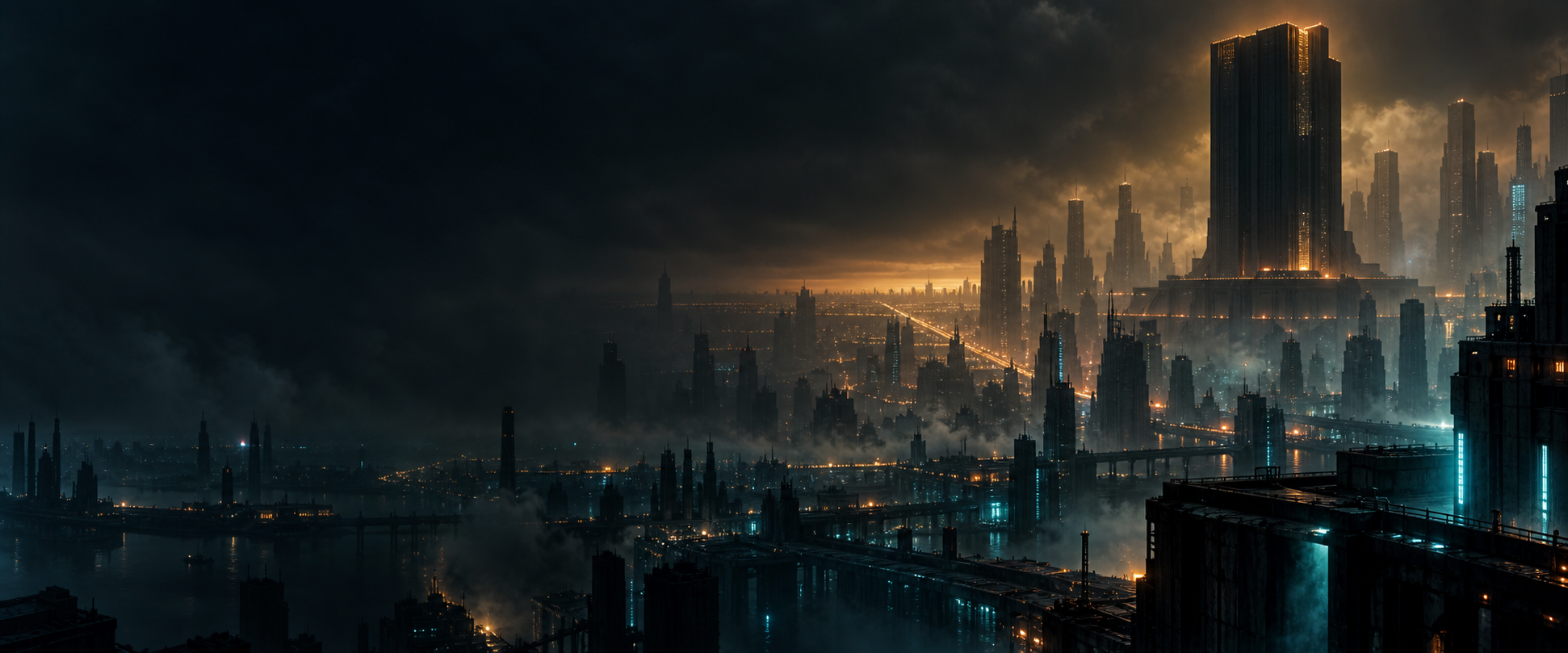
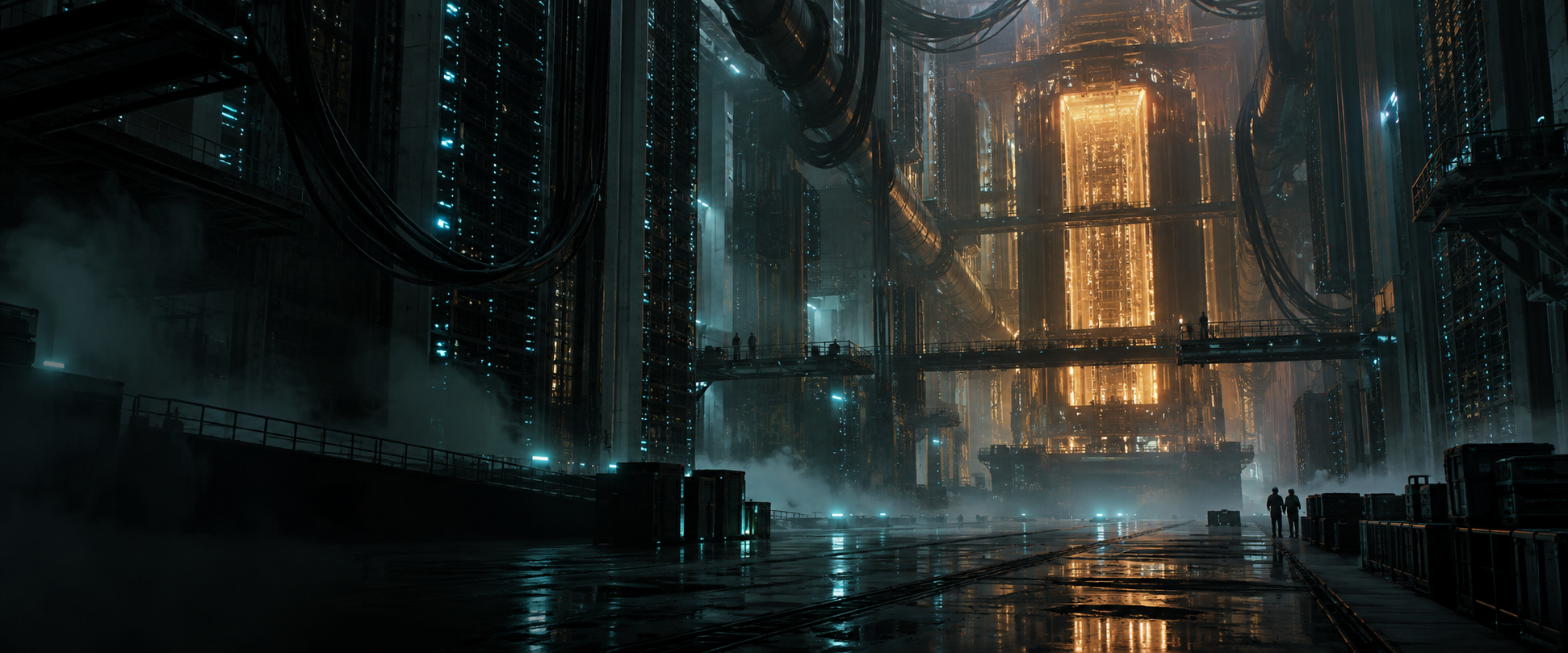
AI 2027 / RACEILLUSTRATED SCENARIO / NOT OBSERVED EVENTS
SCENARIO STAGE11:30Agents act across multiple steps
CHAPTER 01 / 04
The lab never sleeps.
THIS PATH ON THE CLOCK Evidence position Illustrated chapter
Explore the assumptionsAdjust the underlying illustrative model and compare its charts.+
SCENARIO PRESET
Set the conditions
01—04Relative settings from 0 to 100.
These are your assumptions, not measurements.
ILLUSTRATIVE TRAJECTORIES
2030A widening gap.
AI capabilitySafeguardsShared prosperity
AI capability—INDEX / 100
Safeguards—INDEX / 100
Shared prosperity—INDEX / 100
Illustrative pressure—INDEX / 100
ⓘ
This is an educational thought experiment. The equations, index values, and presets are designed for this explorer; they are not calibrated forecasts, extinction probabilities, or the source authors’ models.
A pathway through this world
SCENARIO NARRATIVE · DATES ARE NOT OBSERVED EVENTSTHE OPEN QUESTION
WHAT TO WATCH
05 / THE EVIDENCE
Read beyond the headline.
Follow the sources. Challenge the assumptions.
Measurements tell us what systems have done. Forecasts explore what might follow. Visions and arguments ask what we should aim for—or avoid.
CURATED SNAPSHOT11 SEPTEMBER 2026
Core evidence and scenario theses are collected here. Every model, hardware, policy, and incident record in the acceleration archive has its own source. This is a curated snapshot; external publications require an internet connection.